

On a daily basis, the internet is used multiple times a day and humans today rely on it more than we realize. We use the internet to find out what time it is, when looking for directions, finding which team won a sports game, researching a recipe, booking flights, and finding medical records. While 67.9% of the global population are internet users, this has a negative effect on the world’s carbon footprint.
Building a website can be positive as it spreads useful information to a wider audience, but having this on the ‘web’ and ‘cloud’ on servers use energy to keep all this formation stored. Out of the 67.9% of the global population, there are around 30 billion internet-connected devices in the world. Some of these devices include phones, computers, ipads, and TV’s, which are used every day by billions of people. As the need for these devices increases and the amount used in each household, more energy is being used.

To transition into using cleaner energy, some companies like website carbon are able to calculate the carbon emissions by measuring the data transferred over the wire when a web page is loaded and multiply that by the energy usage data that the website has. For The Livventure’s, the website achieved a carbon rating of an A as the score came out to be cleaner than 83% of all the web pages globally.
For The Livventue’s, only 0.18g of CO2 is produced every time someone visits the website. If over the span of a year, if the website receives 100,000 monthly page views, it would be equivalent to:
-2,883 cups of boiling tea
-4,627 full charges of an average smartphone
– 23 billion bubbles
– 1 tree absorbs the amount of carbon in a year
-Drive an electric car 355km
While The Livventure’s is a small blog, let’s put another website like Amazon into perspective. On Website Carbon’s Calculator, Amazon receives an F rating as the website is dirtier than 88% of all web pages globally. The website uses 1.90g of CO2 is produced every time someone visits. Let’s put it into the perspective if the website receives 10 million monthly page views is equivalent to:
-30,831,421 cups of boiling tea
-42,898,923 full charges of an average smartphone
-243 trillion bubbles
-10,343 trees absorb the amount of carbon in a year
-Drive an electric car 3,294,637km
The last static is equivalent to driving around the Earth’s circumference over 80 times! For one more perspective, let’s use a popular website like Vogue, with a uvm (unique visitors a month) of 401,328 in the United States. The website uses 2.79g of CO2 produced every time someone visits. Let’s put it into the perspective if the website receives the 401,328 monthly page views is equivalent to
-1,820,412 cups of boiling tea
-2,525,796 full charges of an average smartphone
-16 trillion bubbles
-608 trees absorb the amount of carbon in a year
– Drive an electric car 194,676km

According to Nature, the IT industry could use about 20% of all electricity produced and emit up to 5.5% of the world’s carbon emissions, with a growing portion coming from data centers. These centers use non-renewable sources of electricity like fossil fuels and nuclear energy.
It is reported that around 50% of these centers use a ‘hyperscale,’ which contains more than 5,000 servers and are typically bigger than 1,000m² which are owned by large companies like Amazon, Google, and Microsoft, just to name a few. One of these facilities is equivalent to:
-1/4 of an acre
-10,763 square feet
-A medium-size office building
-A large warehouse
-Several single-family houses
While these major facilities are continuing to help us, yet hurt the environment, some companies are working towards lowering their energy bills. Google has a goal that by 2030, they would like to achieve 24/7 renewable energy that will be fully powered by data centers. This has been achieved by a data center in Last Vegas by Google in 2020. The facility in Henderson, Nevada was chosen as the Guinee pig due to its location having an abundance of solar and wind energy.

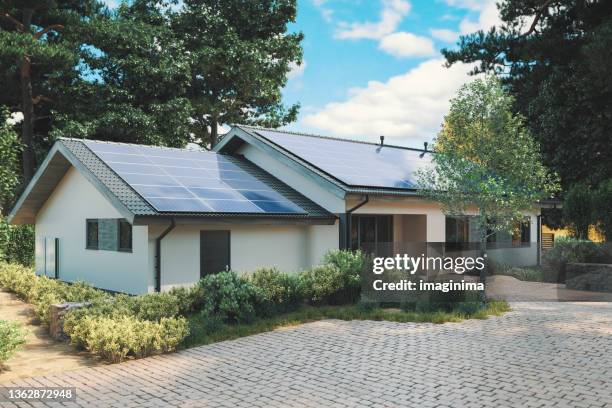
Small businesses and homes can also do their part to eliminate the amount of carbon energy by using solar panels or wind turbines in areas with an abundance of wind or sun throughout the year.
The internet is growing bigger every day and there has been the conversation of if the sun can be used more to further eliminate the use of carbon energy and there have been some initiatives.
An example is Solar Protocol, who uses a network of solar servers across the world. When an individual uses the website, that person’s content is delivered from the server receiving the most solar energy at that time. If the energy from the sun is below a threshold (either by a cloudy or snowy day) the website will be low-resolution until the solar energy is above the threshold.
This has become a challenge for engineers and designers to scale this to help run numerous websites and devices while still having high-resolution quality when using the internet. While companies want to use solar energy more, they also must keep up with company standards and deliver the best quality resolution.
This will also help homeowners who did not pay as much towards their energy bills and businesses who are looking to cut any unnecessary costs.
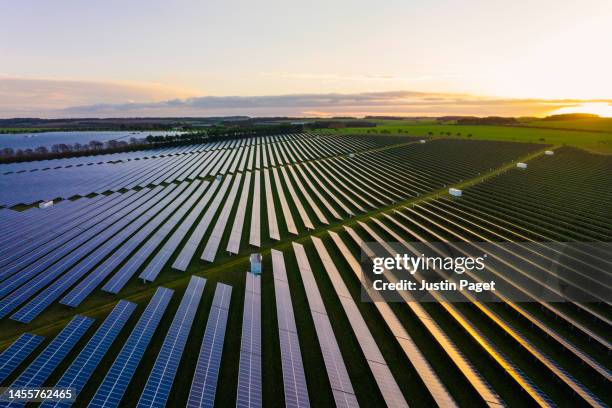
The largest solar farm in the United States is at Topaz Solar Farm in San Luis Obispo County, CA that stretches 4,700 acres. This area is home to over 8 million solar panels across 16 kilometers, which is equivalent to
-2,872 football fields
-75,200 tennis courts
-1,044 baseball fields
-45,810 basketball courts
This solar farm is an example of what the future of renewable energy will look like. The location is the California desert offers sunny skies for weeks at a time with no worry for snow or any harsh weather. This solar farm powers more than 160,000 homes in California.
As we continue to advance into the Information age and more people continue to use the internet, it’s important to keep our one and only planet healthy, by eliminating fossil fuels.